Image
Maile Morrish, Staff Writer
In 1970, the first Pride marches across the United States were held on the one-year anniversary of the Stonewall Uprising of 1969. In equal acts of celebration and protest, participants marched for full equality and queer liberation through the streets of New York, Los Angeles, San Francisco, and Chicago. San Diego’s first (official) Pride March was held downtown in June of 1975, though efforts to support the movement and celebrate the community started years before.
Having since shifted to July, San Diego’s Pride Month gives us a chance to celebrate the city’s vibrant and diverse LGBTQ+ (Lesbian, Gay, Bisexual, Transgender, Queer) community and to tell stories that have not always been fully recognized. In San Diego, those stories include scientists, engineers, architects, and innovators whose work and identities have helped shape both our city and the future of STEM.
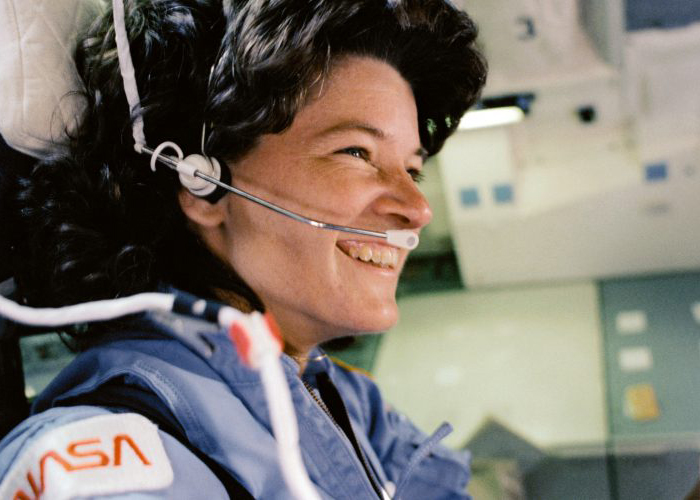
One of those stories belongs to Sally Ride, the first American woman in space, and the first known member of the LGBTQ+ community among the stars.
Sally Ride was an American physicist and astronaut who, most notably, served as a mission specialist aboard Space Shuttle Challenger on the STS-7 mission in 1983. During this mission, and the STS-41G the following year, Ride conducted extensive Earth observations, operated the shuttle’s mechanical arm, helped deploy communication satellites, and more, logging over 343 hours in space.
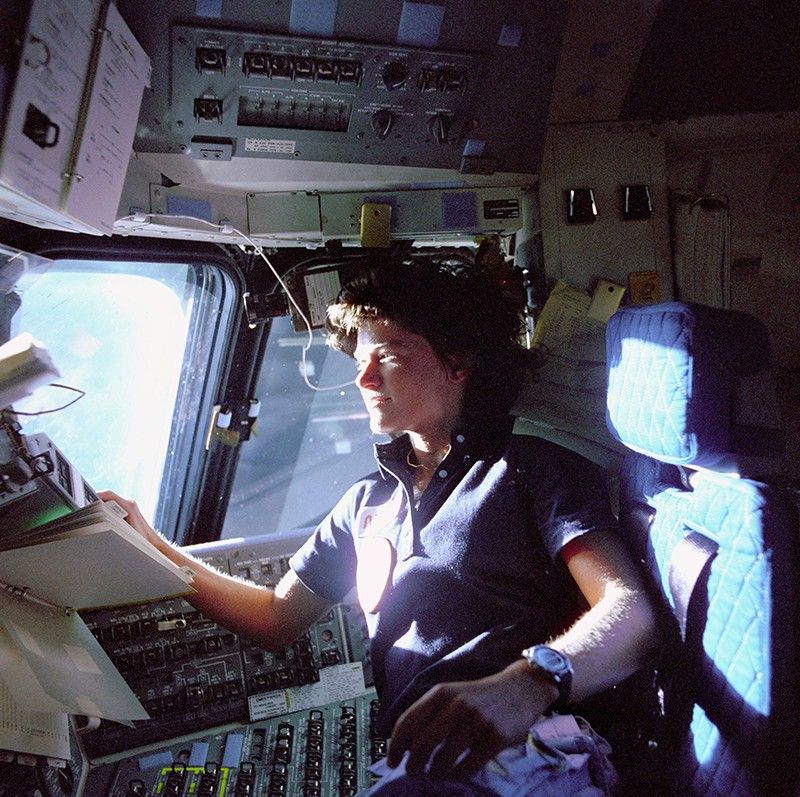
After leaving NASA, Ride took her trailblazing to San Diego, where she worked as a professor of physics at UC San Diego, wrote science books for young people, and founded a youth education organization.
Often found next to Ride’s name are the words “first American woman in space,” a remarkable and historic accolade that has cemented her role in space pioneering history. What many didn’t know at the time of her historic journey, however, was that she was also the first known LGBTQ+ astronaut.
Years after Ride’s missions, the public came to understand another piece of her identity. Much of the world learned in her 2012 obituary that she had shared a 27-year partnership with her business partner and close friend Tam O'Shaughnessy.
For those closest to Ride, her relationship was never a secret. Her sister, Bear Ride, shared in a tribute essay that Sally "never hid her relationship with Tam. Sally's very close friends, of course, knew of their love for each other.”
Ride’s decision to keep her private life out of the spotlight reflects the way she approached the fame that accompanied being the first American woman in space. She rarely commented on the superlative, if at all. "She just didn't think that way,” said Ride’s sister, Bear Ride. “She wanted to get the job done. Her personal feelings were just that: personal. Not right or wrong—simply Sally."
While Ride’s reasons for privacy remain her own, her experience reflects that of many women and LGBTQ+ professionals at the time. Gender discrimination and homophobia were widespread across many professional fields, including STEM, in the 80s. And though social acceptance was slowly spreading, there were no federal laws protecting LGBTQ+ individuals from workplace discrimination, resulting in routine termination of employees for identifying as gay.
In the 21st century, LGBTQ+ communities still face social, political, and professional obstacles, though they come in different forms. Understanding the fuller picture of Ride’s identity in the last decade has become an important part of understanding her legacy and the importance of representation in STEM today.
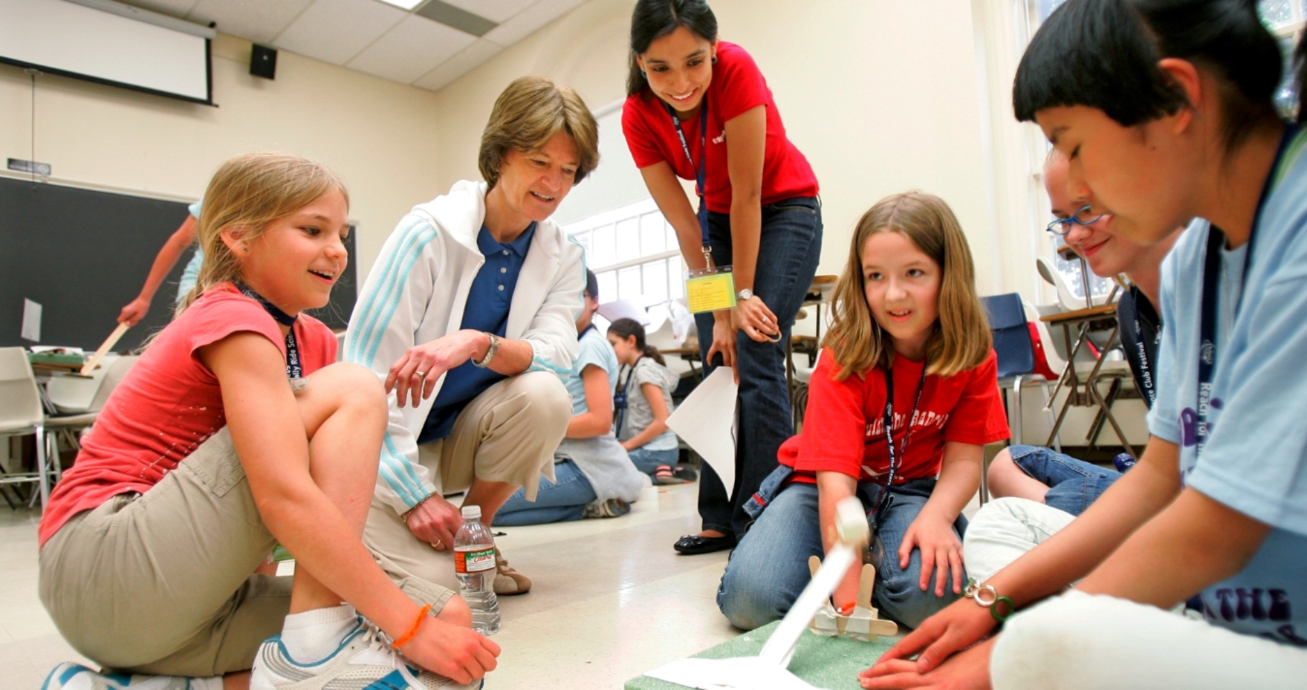
In San Diego, that legacy lives on through Sally Ride Science, the educational organization that Ride started with O'Shaughnessy in 2001 to narrow the gender gap in STEM and inspire young people, especially girls, to pursue their dreams.
Today, Ride’s legacy extends even further. Alongside her groundbreaking achievements in space exploration and STEM education, she has also become a monumental figure in LGBTQ+ history, showing LGBTQ+ students, scientists, and dreamers that they can achieve excellence exactly as they are.
“I hope the GLBT community is going to be absolutely thrilled that there’s now this advocate they didn’t know about,” said Bear Ride. “I hope it makes it easier for kids growing up gay to know that another one of their heroes was like them.”
Pride Month reminds us that the world is richer when stories are told in full. Ride’s role in history is not defined by being the first woman in space or even the first known LGBTQ+ astronaut, but by the generations of future scientists and astronauts that she continues to inspire.
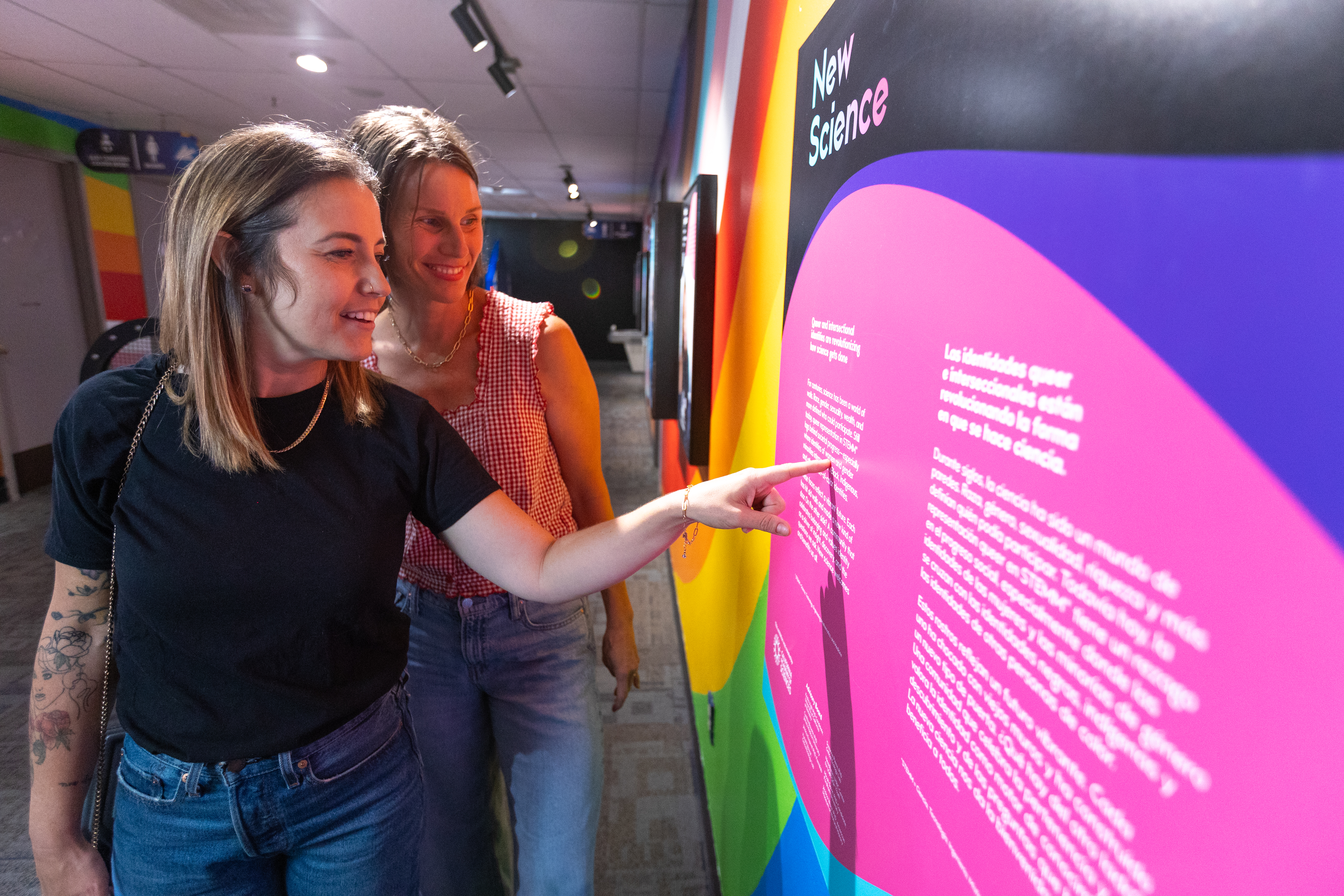
This Pride Month, the Fleet is celebrating trailblazers like Sally Ride who light up our community and push science forward. Their achievements help us better understand the STEM world, and expand our understanding of who belongs in it. Celebrate with us in the Fleet’s New Science exhibit, where you can discover dozens of the LGBTQ+ innovators who are shaping the past, present, and future of science in San Diego.
Header photo courtesy of UC San Diego, Sally Ride Science.